Solar-powered education

01 February 2004

Cuba Si
The magazine of CSC
Laurie Stone writes about Cuba’s programme to electrify rural schools and provide every child with access to a computer
Spring 2012
Sport at the heart of revolution
Summer 2011
A socialist path to sustainability
A manufactured dissident
Breaking the Silence: Beyond the Frame- Contemporary Cuban Art
Restructuring the Revolution
Spring 2011
In Santiago it is always the 26th
50 years of solidarity
Revealing Che’s revolutionary roots
The Doctors’ Revolution
Winter 2011
Habana Hoy: The New Sound of Cuban Music
Gerardo remains positive
Playa Girón
Latin lessons: What can we learn from the world’s most ambitious literacy campaign?
Autumn 2010
Sustaining the revolution
Cuba and the number of “political prisoners”
Daughter of Cuba
La revolucion energetica: Cuba's energy revolution
Summer 2010
Noam Chomsky on Cuba-US relations - exclusive
Friends of Cuba Solidarity Campaign
Waste not, want not
Miami 5 updates
Spring 2010
Cubans in Haiti
Remedios y sus Parrandas
Concert for Haiti
The real war on terror
Auntumn 2009
Interview with families of the Five
Autumn 2009
Juan Almeida Bosque – hero of the revolution
Presidio Modelo, School of Revolutionaries
Summer 2009
From here to there - Interview with Omar Puente
Talking to Aleida Guevara
Pride in Cuba
Ken Gill ‘son of Cuba’
Cuba50 - 40,000 people join the celebrations
Spring 2009
Confronting rhetoric with reality
Talking about a Revolution
Pushing for a change in UK policy
A chance encounter with Operación Milagro
Winter 2008-9
Hasta La Victoria Siempre - Interview with Cuban poet who witnessed Revolution
The revolution that defies the laws of gravity
Feminising the Revolution
Autumn 2008
Families torn apart - Miami 5 interview
After the storm - Hurricane report
TUC Congress reports
Terror in Miami - Cuba's exile community
Summer 2008
Havana rights
AGM Report - CSC celebrates year’s successes
Miami Five – Ten years on
Changes in Cuba?
Spring 2008
Celebrating 50 years of progress
Fidel stands down
Libraries at the heart of the community
Lessons for a greener world
Cuba50 – Celebrating Cuban Culture
Winter 2007/08
“In every barrio, Revolution!” - CDR Museum opens
Fighting for the Five - Leonard Weinglass interview
The World of Work in a Changing Cuba
Campaign on Barclays and extraterritoriality continues…
Autumn 2007
21st century medicine
The living legacy of Che
Interviewing Fidel
Summer 2007
Farewell to Vilma:
From Pakistan to Rotherham:
Whose rules rule?
Spring 2007
Feeding the revolution
Stop the Hilton Hotels ban
Teaching citizenship the Cuban way
Winter 06/07
Exclusive: London's Mayor visits Cuba (inglés y espanol)
Rendezvous with lies
World Circuit Records celebrates 20 years
Autumn 2006
Life without Fidel
The landing of the Granma
America's favourite immigrants
Summer 2006
From Cuba with love: Cuban doctors in Pakistan
Teatro Miramar: a dream to be realised
Bush’s ‘secret’ plan for Cuba
Spring 2006
Exporting healthcare: Cuba and the real meaning of internationalism
Let there be Light
“Hombres not Nombres”
Winter 2005-6
Confessions of an “independent” trade unionist
We are stronger than ever
Europe partakes in a recipe for disaster cooked up in Washington
Autumn 2005
Brendan Barber pledges TUC support for Cuba
Five reasons why the people rule
Education from womb to tomb
Summer 2005
Bill and Joe’s Cuban cycle adventure
Poet of Guantanamo
Participation is key to Cuba’s democracy
Spring 2005
Is Venezuela next after Iraq?
Trip of a lifetime
Justice delayed, justice denied
Winter 2004/5
Cuba's Response to AIDS
Books: Bulwark against neo-liberalism
Guide to the `Report from the Commission for Assistance to a Free Cuba´
Autumn 2004
Book review: Cuba’s story
Autumn 2004
Heart strings
Speaking truth to power: Cuba at the UN
Summer 2004
Salud International to back Cuban internationalist doctors
Cuba saved my daughter
A revolution in culture
Spring 2004
Miami Five: Hopeful of justice
Biotech for all
US occupation of Guantanamo Bay is illegal, says top lawyer
Winter 2003/4
The truth about Reporters Sans Frontières
Solar-powered education
Charting women’s progress since 1959
Autumn 2003
Does the FCO website betray a political bias against Cuba?
Join the CSC bike ride to Cuba
How the US stole Guantanamo Bay
Summer 2003
Hands Off Cuba Campaign Launched
Monument to freedom
EU lines up with US
UK lawyer visits Havana
Ibrahim Ferrer: a lesson in greatness
My secret mission to meet Fidel
The Miami Five -an injustice too far
Spring 2003
Beyond the beach and sun:
CSC’s Father Geoff Bottoms visits one of the Five
Cuban student tours UK
Autumn 2002
British credit cards hit by US sanctions
Housing for the People
Moncada Day Cycle Challenge
Summer 2002
Evil Spirit
From May Day In Havana To The Cradle Of The Revolution
A dream for all times
How foreigners fuel US anti-Cuba policy
Spring 2002
African Roots
How the US planned to start a war with Cuba
Toys for Cuba
Welsh Education Minister meets Fidel
Solar-powered educationTravel around rural Latin America and you are sure to see schools without basic educational tools let alone electricity. Not in Cuba. Over 34,000 children in rural areas of the Caribbean island are reading, writing and watching educational videos by the power of the sun.

Cuba's commitment to education is astounding. Although many countries have obligatory schooling, Cubans take obligatory schooling to mean that they are required to provide the best educational opportunities possible for their children. They also take family seriously. In order to allow small children to remain close to their homes, every rural community, no matter how remote or how small, has a primary school. And every primary school in these remote areas is powered by photovoltaics.

Before 1959, Cuba was using 800 MW of electricity, and the majority of it was in the large cities. After the Cuban revolution in 1959, the government made rural electrification a priority, and in the next 30 years, 95% of the country was electrified with over 3000 MW. However, Cuba had been buying oil inexpensively from the Soviet Union. The 1989 collapse of the Soviet Union, along with a tightening of the U.S. enforced economic blockade, led to the bottom falling out of the Cuban economy, which the Cubans call the "Special Period".

They now have to buy oil on the international market, which their fledgling economy cannot afford. This led to a desire to decrease their dependence on fossil fuels and use more renewables. And, even during the "Special Period" social programs such as education and health care were not cut, but remained a high priority of the Cuban revolution.

In order to better the quality of education for their children, in the year 2000 the Cuban government financed a programme to electrify all of the primary schools in the country that had no electricity. The programme was carried out by the solar panel distributor company Ecosol Solar. In less than one year from the time the first solar panel was installed, 1,994 schools had a photovoltaic system.

Each system consists of a 165 watt module, a 20 amp controller, a 250 watt inverter and a 220 amp-hour battery bank. Three of the systems also include a small wind generator. Each school has two 15 watt DC lights, and an ac television and VCR for educational programs. The systems are designed to run five hours a day if they watch a video. Without the video, the systems can run for eight hours a day.


PV Brigadistas

In order to carry out such an ambitious project, the non-governmental organisation Cubasolar and Ecosol trained brigades in each of the provinces in the installation of PV systems. The brigades were made up of representatives of Ecosol, University professors, students, teachers and other volunteers from the province. These 25 brigades went to the rural areas, installed the systems and trained local people in the maintenance of the systems.

A maintenance video was shown to the teachers at each school. The teachers are in charge of monitoring the battery level, and occasionally cleaning the panels. Every ninety days each school receives a maintenance visit from a technician. There is also a repair shop in each province, and a minor repair shop in each territory (the provinces are made up of numerous territories) set up by Ecosol. An Ecosol technician also does a periodic inspection of the entire system.

There have been no reported problems with any of the school systems so far. Even with the PV electrified health clinics program, which began in 1987 (see Home Power #66, August/September 1998) there have been very few fatalities. Many of these systems have actually survived three hurricanes with no damage. Ecosol credits the lack of failures of the systems to user training.

The PV electrified schools bring the total number of PV systems in Cuba to over 2400. These include 320 health clinics, 100 social centers, four rural hospitals and numerous houses. Currently Cuba is importing part of their photovoltaic hardware. However, they have built their own charge controllers and they also have a PV manufacturing plant in Pinar del Rio where they are producing PV modules with 14% efficiency. Due to their economic situation, they are currently not producing their panels for use. However, with financing the factory could produce one megawatt of PV panels a year. Their hope is that in the future the systems can by made up of Cuban parts.


Computers for the Countryside

In June of 2001, Cubasolar received the United Nation's Environmental Programme 'Global 500' Award for this remarkable programme. However, the school electrification program was not finished yet. The Cuban government wants every child in Cuba to have access to a computer. They put a computer in every primary school by March of 2002 and Cubasolar and Ecosol added one more panel to each primary school so that each system can also run the computer.


Environmental Education

Children in Cuba not only learn by PV technology, but also learn about PV technology. In the middle of Havana, young children learn about renewable energy in the environmental classroom in Ciudad Libertad. Ciudad Libertad (Freedom City) was an army barracks in pre-revolutionary Cuba. After 1959, it was converted into a school complex. It now contains preschool through university classrooms. Children from schools all over Havana use the environmental education classroom in Ciudad Libertad to learn about environmental issues including energy conservation, recycling and renewable energy.

1,340 students visited the classroom on World Environment Day (June 5) alone. On a recent visit, young boys were drawing pictures of PV powered hospitals and schools. Renewable energy education is integrated into other schools as well. The Basic Industry Ministry financed a book on environmental education for teachers, and Cubasolar estimates that 98% of all Cubans know that solar panels produce electricity.

Cuba takes its commitment to education seriously. Their economic hardships and lack of access to fossil fuels do not deter them from providing high quality education to every child in Cuba. Jose Marti, the Cuban hero who ed the fight against Spain for Cuban Independence said, "People can't be more perfect than the sun. The sun burns with the same light that it heats. The sun has spots. The unfortunate speak only of the spots. The fortunate speak of the light."

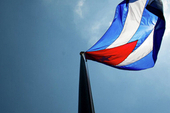
Cubans are using the light of the sun to combat their oil shortage, and ensure a superior education for their children. Now every rural Cuban primary school proudly displays a Cuban flag, a bust of Jose Marti and a photovoltaic system.


For more information

Laurie Stone and Solar Energy International: sei@solarenergy.org, www.solarenergy.org

Cubasolar, fax: 537-24-3117. 537-54-5135, e-mail: sol@colombus.cu, www.cubasolar.cu


TOP
Bookmark and Share RSS