Monument to freedom

31 July 2003

Cuba Si
The magazine of CSC
50th anniversary of the Moncada attack
Spring 2012
Sport at the heart of revolution
Summer 2011
A socialist path to sustainability
A manufactured dissident
Breaking the Silence: Beyond the Frame- Contemporary Cuban Art
Restructuring the Revolution
Spring 2011
In Santiago it is always the 26th
50 years of solidarity
Revealing Che’s revolutionary roots
The Doctors’ Revolution
Winter 2011
Habana Hoy: The New Sound of Cuban Music
Gerardo remains positive
Playa Girón
Latin lessons: What can we learn from the world’s most ambitious literacy campaign?
Autumn 2010
Sustaining the revolution
Cuba and the number of “political prisoners”
Daughter of Cuba
La revolucion energetica: Cuba's energy revolution
Summer 2010
Noam Chomsky on Cuba-US relations - exclusive
Friends of Cuba Solidarity Campaign
Waste not, want not
Miami 5 updates
Spring 2010
Cubans in Haiti
Remedios y sus Parrandas
Concert for Haiti
The real war on terror
Auntumn 2009
Interview with families of the Five
Autumn 2009
Juan Almeida Bosque – hero of the revolution
Presidio Modelo, School of Revolutionaries
Summer 2009
From here to there - Interview with Omar Puente
Talking to Aleida Guevara
Pride in Cuba
Ken Gill ‘son of Cuba’
Cuba50 - 40,000 people join the celebrations
Spring 2009
Confronting rhetoric with reality
Talking about a Revolution
Pushing for a change in UK policy
A chance encounter with Operación Milagro
Winter 2008-9
Hasta La Victoria Siempre - Interview with Cuban poet who witnessed Revolution
The revolution that defies the laws of gravity
Feminising the Revolution
Autumn 2008
Families torn apart - Miami 5 interview
After the storm - Hurricane report
TUC Congress reports
Terror in Miami - Cuba's exile community
Summer 2008
Havana rights
AGM Report - CSC celebrates year’s successes
Miami Five – Ten years on
Changes in Cuba?
Spring 2008
Celebrating 50 years of progress
Fidel stands down
Libraries at the heart of the community
Lessons for a greener world
Cuba50 – Celebrating Cuban Culture
Winter 2007/08
“In every barrio, Revolution!” - CDR Museum opens
Fighting for the Five - Leonard Weinglass interview
The World of Work in a Changing Cuba
Campaign on Barclays and extraterritoriality continues…
Autumn 2007
21st century medicine
The living legacy of Che
Interviewing Fidel
Summer 2007
Farewell to Vilma:
From Pakistan to Rotherham:
Whose rules rule?
Spring 2007
Feeding the revolution
Stop the Hilton Hotels ban
Teaching citizenship the Cuban way
Winter 06/07
Exclusive: London's Mayor visits Cuba (inglés y espanol)
Rendezvous with lies
World Circuit Records celebrates 20 years
Autumn 2006
Life without Fidel
The landing of the Granma
America's favourite immigrants
Summer 2006
From Cuba with love: Cuban doctors in Pakistan
Teatro Miramar: a dream to be realised
Bush’s ‘secret’ plan for Cuba
Spring 2006
Exporting healthcare: Cuba and the real meaning of internationalism
Let there be Light
“Hombres not Nombres”
Winter 2005-6
Confessions of an “independent” trade unionist
We are stronger than ever
Europe partakes in a recipe for disaster cooked up in Washington
Autumn 2005
Brendan Barber pledges TUC support for Cuba
Five reasons why the people rule
Education from womb to tomb
Summer 2005
Bill and Joe’s Cuban cycle adventure
Poet of Guantanamo
Participation is key to Cuba’s democracy
Spring 2005
Is Venezuela next after Iraq?
Trip of a lifetime
Justice delayed, justice denied
Winter 2004/5
Cuba's Response to AIDS
Books: Bulwark against neo-liberalism
Guide to the `Report from the Commission for Assistance to a Free Cuba´
Autumn 2004
Book review: Cuba’s story
Autumn 2004
Heart strings
Speaking truth to power: Cuba at the UN
Summer 2004
Salud International to back Cuban internationalist doctors
Cuba saved my daughter
A revolution in culture
Spring 2004
Miami Five: Hopeful of justice
Biotech for all
US occupation of Guantanamo Bay is illegal, says top lawyer
Winter 2003/4
The truth about Reporters Sans Frontières
Solar-powered education
Charting women’s progress since 1959
Autumn 2003
Does the FCO website betray a political bias against Cuba?
Join the CSC bike ride to Cuba
How the US stole Guantanamo Bay
Summer 2003
Hands Off Cuba Campaign Launched
Monument to freedom
EU lines up with US
UK lawyer visits Havana
Ibrahim Ferrer: a lesson in greatness
My secret mission to meet Fidel
The Miami Five -an injustice too far
Spring 2003
Beyond the beach and sun:
CSC’s Father Geoff Bottoms visits one of the Five
Cuban student tours UK
Autumn 2002
British credit cards hit by US sanctions
Housing for the People
Moncada Day Cycle Challenge
Summer 2002
Evil Spirit
From May Day In Havana To The Cradle Of The Revolution
A dream for all times
How foreigners fuel US anti-Cuba policy
Spring 2002
African Roots
How the US planned to start a war with Cuba
Toys for Cuba
Welsh Education Minister meets Fidel
Monument to freedomMonument to freedom

July 26th is the 50th anniversary of the Moncada attack which provided the spark of the Cuban revolution. Here, Dave Willets who lived for a year in Santiago tells the story of this heroic action that changed history. The road from Siboney to Santiago de Cuba is a country way which winds past fields, thatched farmsteads and ever blooming bourganvilia plants. Anyone driving along the road to the Gran Piedra monument might marvel at its simple beauty; they might easily miss the small monuments which dot the roadside and continue on beyond the turn-off for the mountain.
It is these 26 monuments which provide the clue to the immense historical significance of this road. On the return journey, the visitor might feel a slight shiver as the names on the stones become clearer- Renato Miguel Guitart Rosell, Pedro Marrero Aizpurua, Gildo Fleitas Lopez, Jose de Jesus Madera Fernandez, Abel Santamaria Cuadrado, Manuel Gomez Reyes…anyone taking the time to count will discover 61 young men, all of whom made this journey during the early hours of July 26th 1953. Not one of them would make the return.
1953 marked a hugely important anniversary in the history of Cuba. This year was the centenary of the birth of Cuba’s national hero, Jose Marti, international revolutionary, whose words and actions had not only been central to the successful war against the Spanish and the continuing struggle against U.S. imperialism throughout Latin America and the Caribbean but provided the direct inspiration for the group of some 130 young people who gathered at a small farmhouse, the ‘Granjita Siboney’, 13 kilometres outside of Santiago.
Calling themselves the ‘Generation of the Centenary’ , they had, during the previous year, witnessed a bloody military coup led by Fulguensio Batista. Fidel Castro, the group’s leader, pointed out the tragic irony of this state of affairs-
“It would seem”, he said, “that the Apostle might have died in the year of his own centenary.”
The youth of Cuba had decided to deliver a blow to Batista’s tyranny in the form of an attack on Santiago’s army garrison, the ‘Guillermon Moncada’. This would coincide with an attack on the garrison in Bayamo, leading to a popular uprising by an already agitated people.
The garrison itself was already a strong symbol of oppression. Built in 1869 as a prison to incarcerate rebels of the newly declared war of independence, the ‘Prision Modelo’ was deliberately placed in the heart of the town, it remained as a prison and an army garrison throughout the years of U.S. imperialism. Nora Pierre, 30 years director of the 26th July museum, pointed out the brutal effects of American influence –
“They (the U.S.) re-named the garrison ‘Guillermon Moncada’, supposedly in homage to one of the important generals in the war for freedom. But the oppression and torture was reproduced with more rigour. It was actually more bloody than under the Spanish.”
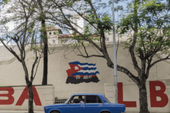
In a country where any large group on the move might be seen as dangerous to public order, the date to gather was chosen to coincide with Santiago’s famous carnival celebrations. During the night of the 25th of July, as the streets of the city still rang to the sound of the drums and cornets of the comparsas, young Cubans from all over the country (only one Santiagueran participated in the attack) secretly began to make their way along the road to the farmhouse.
A group of abosut 95 would travel with Fidel straight to the garrison, armed and ready to attack; these would be supported by 21 youths, who under the command of Abel Santamaria would occupy the hospital ‘Saturnino Lora’ close by to the garrison. Raul Castro would, with 10 others, occupy the Palace of Justice.
At about 4am, Fidel spoke.
“Youth of the centenary, as in ’68 and ’95, here in Oriente we give the first cry of ‘FREEDOM OR DEATH’!”
18 cars left together for the city. Whilst the hospital and the palace of justice fell swiftly to the rebels, one of the leading drivers, unfamiliar with Santiago, got lost amongst the maze of city streets. This meant that the vanguard and Fidel’s group had to attack without support. They had forfeited the element of surprise and were swiftly and brutally dealt with. Only 8 of the youths were killed in the heat of the battle, but unforgivably, 53 were murdered once the fighting was over, many suffering terrible torture. The heroic Abel Santamaria’s eyes were plucked out before he was shot. During his trial, Fidel spoke of the carnage-
“The Moncada garrison was converted into a workshop of torture and death, and men without dignity converted their uniforms into butcher’s aprons. The walls were splattered with blood; on the outer walls bullets remained encrusted with fragments of human skin, brains and hair, and the parade ground was covered with dark and sticky blood.”
Without doubt, the heroism of these young men and women was the catalyst for the revolution. Before long, the mountains surrounding Santiago, visible from the towers of the garrison, became the central focus for the growing struggle for freedom from oppression.
One of the first acts of the triumphant Revolution was to convert all prisons and garrisons built by the Spaniards into schools and hospitals. The ‘Guillermon Moncada’ was no exeption. In 1960 four poorly-housed schools moved in and in 1967 part of the garrison was converted into a museum showing 100 years of revolutionary struggle in Cuba. It is this redeeming idea, that of the potential to remake, to contribute, to effect the change from slavery to liberty, that transformed the Moncada garrison from prison to potent example of socialism in action.
Santiago resonates with history. From the oldest house in Cuba to the African cabildos, this city has a proud and strong past. But no sites are more poignant and symbolic of revolutionary change than those associated with the events which took place 50 years ago. A house of torture and death has been transformed into a space where children learn and play. Abel Santamaria Park stands close by an eye hospital dedicated to his memory. The road from the Granjita Siboney has become a memorial to those youth who gave their lives for a better land. On the morning of 26th July 1953 only they knew that this road led to revolution.

Dave Willetts 2003
TOP
Bookmark and Share RSS