Pride in Cuba

01 September 2009

Cuba Si
The magazine of CSC
Summer 2010
Noam Chomsky on Cuba-US relations - exclusive
Friends of Cuba Solidarity Campaign
Waste not, want not
Miami 5 updates
Spring 2010
Concert for Haiti
Cubans in Haiti
Remedios y sus Parrandas
The real war on terror
Auntumn 2009
Interview with families of the Five
Autumn 2009
Juan Almeida Bosque – hero of the revolution
Presidio Modelo, School of Revolutionaries
Summer 2009
From here to there - Interview with Omar Puente
Ken Gill ‘son of Cuba’
Talking to Aleida Guevara
Pride in Cuba
Cuba50 - 40,000 people join the celebrations
Spring 2009
A chance encounter with Operación Milagro
Confronting rhetoric with reality
Talking about a Revolution
Pushing for a change in UK policy
Winter 2008-9
Hasta La Victoria Siempre - Interview with Cuban poet who witnessed Revolution
The revolution that defies the laws of gravity
Feminising the Revolution
Autumn 2008
Families torn apart - Miami 5 interview
TUC Congress reports
Terror in Miami - Cuba's exile community
After the storm - Hurricane report
Summer 2008
AGM Report - CSC celebrates year’s successes
Havana rights
Changes in Cuba?
Miami Five – Ten years on
Spring 2008
Libraries at the heart of the community
Lessons for a greener world
Fidel stands down
Celebrating 50 years of progress
Cuba50 – Celebrating Cuban Culture
Winter 2007/08
“In every barrio, Revolution!” - CDR Museum opens
Fighting for the Five - Leonard Weinglass interview
The World of Work in a Changing Cuba
Campaign on Barclays and extraterritoriality continues…
Autumn 2007
The living legacy of Che
Interviewing Fidel
21st century medicine
Summer 2007
From Pakistan to Rotherham:
Farewell to Vilma:
Whose rules rule?
Spring 2007
Feeding the revolution
Stop the Hilton Hotels ban
Teaching citizenship the Cuban way
Winter 06/07
Exclusive: London's Mayor visits Cuba (inglés y espanol)
Rendezvous with lies
World Circuit Records celebrates 20 years
Autumn 2006
The landing of the Granma
America's favourite immigrants
Life without Fidel
Summer 2006
Teatro Miramar: a dream to be realised
From Cuba with love: Cuban doctors in Pakistan
Bush’s ‘secret’ plan for Cuba
Spring 2006
Exporting healthcare: Cuba and the real meaning of internationalism
Let there be Light
“Hombres not Nombres”
Winter 2005-6
Europe partakes in a recipe for disaster cooked up in Washington
We are stronger than ever
Confessions of an “independent” trade unionist
Autumn 2005
Education from womb to tomb
Brendan Barber pledges TUC support for Cuba
Five reasons why the people rule
Summer 2005
Participation is key to Cuba’s democracy
Bill and Joe’s Cuban cycle adventure
Poet of Guantanamo
Spring 2005
Justice delayed, justice denied
Is Venezuela next after Iraq?
Trip of a lifetime
Winter 2004/5
Cuba's Response to AIDS
Books: Bulwark against neo-liberalism
Guide to the `Report from the Commission for Assistance to a Free Cuba´
Autumn 2004
Book review: Cuba’s story
Autumn 2004
Heart strings
Speaking truth to power: Cuba at the UN
Summer 2004
A revolution in culture
Cuba saved my daughter
Salud International to back Cuban internationalist doctors
Spring 2004
Biotech for all
US occupation of Guantanamo Bay is illegal, says top lawyer
Miami Five: Hopeful of justice
Winter 2003/4
Charting women’s progress since 1959
The truth about Reporters Sans Frontières
Solar-powered education
Autumn 2003
Join the CSC bike ride to Cuba
How the US stole Guantanamo Bay
Does the FCO website betray a political bias against Cuba?
Summer 2003
Hands Off Cuba Campaign Launched
Monument to freedom
EU lines up with US
UK lawyer visits Havana
My secret mission to meet Fidel
Ibrahim Ferrer: a lesson in greatness
The Miami Five -an injustice too far
Spring 2003
Cuban student tours UK
Beyond the beach and sun:
CSC’s Father Geoff Bottoms visits one of the Five
Autumn 2002
Housing for the People
Moncada Day Cycle Challenge
British credit cards hit by US sanctions
Summer 2002
Evil Spirit
From May Day In Havana To The Cradle Of The Revolution
A dream for all times
How foreigners fuel US anti-Cuba policy
Spring 2002
African Roots
How the US planned to start a war with Cuba
Toys for Cuba
Welsh Education Minister meets Fidel
Pride in Cuba CSC was delighted that two of Cuba’s leading campaigners for gay rights accepted invitations to major LGBT and Cuba50 events in the UK in July
On Saturday 4 July, Mariela Castro, Director of the Cuban National Centre for Sexuality Education (CENESEX) and daughter of Cuban President Raul Castro, was joined by Dr Alberto Roque, LGBT and CENESEX activist on stage at London’s Pride march and rally.

More than half a million Lesbian, gay, bisexual and transgender people (LGBT) and supporters packed the streets of London to mark the annual pride event, and Mariela and Albert marched for two hours alongside the fire fighters contingent with the FBU and TUC section.

Mariela Castro received a warm welcome from the tens of thousands of people in Trafalger Square as she expressed her "joy at being at this wonderful festival of happiness and equality."

She said: "Cuba was fighting for people to be what they want to be" in reference to the huge strides LGBT people have made since the 1970s.

Alberto Roque, who was in the UK for a week before Pride reported big advances in the fight against homophobia in Cuba to CSC meetings in Newcastle, the House of Commons, and the TUC LGBT conference.
Dr Roque, who works on sexual diversity projects at CENESEX, said that, while it is not illegal to be homosexual, homophobic views still remain in the population, but that the debate in Cuba on gay rights and sexual diversity was "developing in a very positive way" with the support of the Communist Party there.

Responding to questions during a CSC fringe meeting at the TUC conference he reported that huge strides had been made in places like Santa Clara, with a space provided for LGBT people to "be themselves in safety" and that funding had been made available for this despite the tough economic climate."

"We have centuries of misunderstanding to overcome - we will do it step by step," he added.

FBU LGBT committee member Peter Wilcox heaped praise on the island following his first study tour visit last year with CSC.

"I realised then that I was ignorant of the truth about Cuba," he said, referring to the media propaganda he'd been subjected which to stood in stark contrast to his experiences.

"I walked along the Malecon in Havana at 1am in the morning and you see people just having a good time, being openly gay, just being themselves."

Cuba Solidarity Campaign director Rob Miller told the Commons meeting to mark the 50th anniversary of the revolution that it was "time to dispel the myth" that Cuba was a bad example in terms of gay rights.

...................................
Mariela Castro Interview

The problem is homophobia, not the fact that people are gay

To help dispel myths about gay rights in Cuba CSC set up an interview with Mariela Castro and BBC Mundo, a transcript of follows:

“Although we like learning from other people’s experiences, we Cubans don’t like copying formula from other countries. We prefer to find our own ways of solving problems. We don‘t hold Gay Pride marches, but we do organise a yearly festival and we also hold day schools during which people are educated about gay issues. We also hold artistic events to promote respect for different forms of sexual orientation and sexual identity.

The key dates on our calender for educational events and for gay rights campaigns are around the 17 May which is the date when in 1990 the World Health Organisation finally struck homosexuality from its list of mental illnesses. This is an anniversary which we, in Cuba, believe needs to be celebrated. Being gay isn’t the problem; the problem lies in homophobia and it’s for this reason that we are focussing public attention on the question of homophobia which is a mind set that must be changed.

We have been successful in a number of initiatives that we’ve taken. In 2008 we were successful an agreement from the Ministry of Health that all treatment for transexuals, including sex-change operations, would be included as part of our free national health service provision. We’ve also succeeded in ensuring that topics relating to gay and lesbian rights and the rights of transexuals are discussed in a large variety of institutions in Cuban society, including our Parliament. I believe that Parliament is going to present these topics for general public discussion.

Our only set back is public prejudice and the only way to overcome prejudices is to debate and discuss them publicly and to provide information based on scientific fact. In this way we will counter social prejudices. But we are assisted also by the support provided by our laws, by resolutions passed by public institutions and by political speeches. We are seeing the topic of gay and lesbian rights being included with increasing frequency in speeches made by political as well as non-governmental organisations.

...................................

Strawberry and Chocolate – Cuba’s first ‘gay’ film

“We don’t have the socialism we would like, but are always striving to create elements to build a better socialist society, and this was a very valuable film to help this at this particular moment in our history.” This was Mariela Castro’s verdict on the impact the pioneering 1993 Cuban film ‘Fresa y Chocolate’ (Strawberry and Chocolate) had on Cuban society.

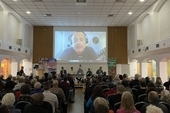
Mariela participated in a Q&A session following a special screening of Strawberry and Chocolate as part of the Cuba50 festival at London’s Barbican.
She was joined on the platform by other special guests from Cuba, LGBT activist Dr Alberto Roque, and the film’s co-director Juan Carlos Tabio, alongside chair, LGBT activist Peter Tatchell.

Introducing the film which is set in the 1970s and was the first in Cuba to feature an openly gay character, Tabio said that “it deals with a period in Cuban history when homosexuality was repressed and the issues raised are ones I wanted to raise in order to provoke the audience.”

“At the time we were more concerned with how the public would react to the film rather than the government reaction to sexual issues. Cuban men are very macho, but the reaction was extraordinary and phenomenal. It seems that sometimes we give in to our own prejudices. In fact, the reaction made me realise that the Cuban people were not as homophobic as we thought.”

Mariela Castro said she felt emotional whenever she saw it as it made her think of the suffering of those “who had to live through this time, and the pain of the contradictions they faced when they wanted to be part of the revolutionary ideal but were not allowed.”

“The Cuban Revolution wanted to embrace an utopian ideal of equality, but didn’t realise that it was a more complex idea than this and that it would need to include all types of people, and I think the film reflects this very simply and honestly,” she added.

Responding to criticism of the stereotyping of the films gay character, Diego, Dr Roque said, “it is not a problem that this is criticised but that it is important that the debate happens. We have made a lot of improvements under the revolution but there is still a lot more to do.”

Tabio concluded a lively and engaging discussion praising the CENESEX director, “I think the work Mariela Castro has done to develop gay rights has benefited all Cubans whether they are gay or straight.”
TOP
Bookmark and Share RSS