Talking to Aleida Guevara

01 September 2009

Cuba Si
The magazine of CSC
Interview with daughter of Che
Summer 2010
Noam Chomsky on Cuba-US relations - exclusive
Friends of Cuba Solidarity Campaign
Waste not, want not
Miami 5 updates
Spring 2010
Concert for Haiti
Cubans in Haiti
Remedios y sus Parrandas
The real war on terror
Auntumn 2009
Interview with families of the Five
Autumn 2009
Juan Almeida Bosque – hero of the revolution
Presidio Modelo, School of Revolutionaries
Summer 2009
From here to there - Interview with Omar Puente
Ken Gill ‘son of Cuba’
Talking to Aleida Guevara
Pride in Cuba
Cuba50 - 40,000 people join the celebrations
Spring 2009
A chance encounter with Operación Milagro
Confronting rhetoric with reality
Talking about a Revolution
Pushing for a change in UK policy
Winter 2008-9
Hasta La Victoria Siempre - Interview with Cuban poet who witnessed Revolution
The revolution that defies the laws of gravity
Feminising the Revolution
Autumn 2008
Families torn apart - Miami 5 interview
TUC Congress reports
Terror in Miami - Cuba's exile community
After the storm - Hurricane report
Summer 2008
AGM Report - CSC celebrates year’s successes
Havana rights
Changes in Cuba?
Miami Five – Ten years on
Spring 2008
Libraries at the heart of the community
Lessons for a greener world
Fidel stands down
Celebrating 50 years of progress
Cuba50 – Celebrating Cuban Culture
Winter 2007/08
“In every barrio, Revolution!” - CDR Museum opens
Fighting for the Five - Leonard Weinglass interview
The World of Work in a Changing Cuba
Campaign on Barclays and extraterritoriality continues…
Autumn 2007
The living legacy of Che
Interviewing Fidel
21st century medicine
Summer 2007
From Pakistan to Rotherham:
Farewell to Vilma:
Whose rules rule?
Spring 2007
Feeding the revolution
Stop the Hilton Hotels ban
Teaching citizenship the Cuban way
Winter 06/07
Exclusive: London's Mayor visits Cuba (inglés y espanol)
Rendezvous with lies
World Circuit Records celebrates 20 years
Autumn 2006
The landing of the Granma
America's favourite immigrants
Life without Fidel
Summer 2006
Teatro Miramar: a dream to be realised
From Cuba with love: Cuban doctors in Pakistan
Bush’s ‘secret’ plan for Cuba
Spring 2006
Exporting healthcare: Cuba and the real meaning of internationalism
Let there be Light
“Hombres not Nombres”
Winter 2005-6
Europe partakes in a recipe for disaster cooked up in Washington
We are stronger than ever
Confessions of an “independent” trade unionist
Autumn 2005
Education from womb to tomb
Brendan Barber pledges TUC support for Cuba
Five reasons why the people rule
Summer 2005
Participation is key to Cuba’s democracy
Bill and Joe’s Cuban cycle adventure
Poet of Guantanamo
Spring 2005
Justice delayed, justice denied
Is Venezuela next after Iraq?
Trip of a lifetime
Winter 2004/5
Cuba's Response to AIDS
Books: Bulwark against neo-liberalism
Guide to the `Report from the Commission for Assistance to a Free Cuba´
Autumn 2004
Book review: Cuba’s story
Autumn 2004
Heart strings
Speaking truth to power: Cuba at the UN
Summer 2004
A revolution in culture
Cuba saved my daughter
Salud International to back Cuban internationalist doctors
Spring 2004
Biotech for all
US occupation of Guantanamo Bay is illegal, says top lawyer
Miami Five: Hopeful of justice
Winter 2003/4
Charting women’s progress since 1959
The truth about Reporters Sans Frontières
Solar-powered education
Autumn 2003
Join the CSC bike ride to Cuba
How the US stole Guantanamo Bay
Does the FCO website betray a political bias against Cuba?
Summer 2003
Hands Off Cuba Campaign Launched
Monument to freedom
EU lines up with US
UK lawyer visits Havana
My secret mission to meet Fidel
Ibrahim Ferrer: a lesson in greatness
The Miami Five -an injustice too far
Spring 2003
Cuban student tours UK
Beyond the beach and sun:
CSC’s Father Geoff Bottoms visits one of the Five
Autumn 2002
Housing for the People
Moncada Day Cycle Challenge
British credit cards hit by US sanctions
Summer 2002
Evil Spirit
From May Day In Havana To The Cradle Of The Revolution
A dream for all times
How foreigners fuel US anti-Cuba policy
Spring 2002
African Roots
How the US planned to start a war with Cuba
Toys for Cuba
Welsh Education Minister meets Fidel
Talking to Aleida GuevaraAleida Guevara attracts interest wherever she goes. Fascination with her father plays a part but crucially it is her own ability to candidly argue the case of Cuba’s revolutionary endeavours that endears her to audiences.

In London at the invitation of the Cuba Solidarity Campaign to support the celebrations of the 50th Anniversary of the triumph of the Revolution, she spoke to Michal Boncza about her own perspective on Cuba in 2009.

Aleida is an unassuming and laid-back person whose impressive powers of persuasion owe as much to her personal candour as to a sharply analytical mind and rigorous intellectual discipline.
Looking jetlagged, we asked her if all the travelling in the cause of the revolution wasn’t a bit tiresome. Physically it was, she confided, particularly as it was affecting her voluntary work back home, where she helps run two homes for disabled children and two refuges for children with domestic problems.

Furthermore, as a paediatrician specialising in childhood allergies, she has also been involved in medical support for a community in the flooded area around Rio Cauto, in eastern Cuba, and plans to work on the Island of Youth that was devastated by recent hurricanes.

Not surprisingly her two daughters, Estefanía 20 and Celia 19, commented, not long ago that they would be happier if mum wasn’t away so much.

Aleida emphasises that her role is to publicise the revolution. However, she doesn’t speak in order to win people to her point of view, but believes: “this is not possible in such a short time; it is more about how you present your case, allowing the other person to draw their own conclusions.”

Asked if she ever refers to her father for inspiration, Aleida mentions his writings and finds his diaries particularly helpful for their political insights and emotional maturity.

“It goes without saying that I would have loved to have sat down with him and discussed my concerns and doubts, but he isn’t here and will never be.
“My dad’s writings are like those of José Martí; the values they encapsulate are everlasting, beyond fads or fashions”, she says.

Reading them, she finds herself occasionally exclaiming “caramba! If only we’d put in practice this or that suggestion we would be in a better position now.”

Aleida recalls the time she worked in Angola as part of a Cuban medical mission “I managed to save many children’s lives, but sometimes I just couldn’t. The sorrow and regret stay with you forever.

“The impotence felt at the time motivates me to act against racism, the exploitation of human beings and the frequent indolence of those who accept things as they are,” she stresses.
Ché said once that he didn’t want his children to be “special, just worthy members of their community” and this, more than anything, characterises and motivates her.

She takes issue with those who see their future away from Cuba arguing that the island offers unique opportunities for self-fulfilment in the service of a wider community.

“Here we clearly failed in our objective to convince such persons of their importance to our society,” she admits sadly adding, “We should do better.”

This infectious insistence on continually trying to perfect all aspects of the socialist society by learning from mistakes, never once resting on laurels, is as symptomatic of Aleida as it once was of her father.
When asked to be specific about areas she considers ripe for corrective intervention she utters a single word “housing.”

“Life in Cuba isn’t and never was easy”, she reminds us, “but we can and should do more to improve housing conditions particularly in the countryside”.

Urban transport is next on the list for a major overhaul. For her, “a highly developed and effective urban transport system is an environmental necessity that would arrest the unsustainable desire for private car ownership”.

“We have one of the best education systems in the world”, she continues, “but when we had a deficit of teachers we encouraged everybody to become one.

“However, not everybody is suited to be an educator. Not everybody has the capacity to inspire, to motivate and support a child in the classroom. By solving one problem we created another which, in turn, has to be solved now”.
New appointments at ministerial level, including an education minister, demonstrate, Aleida believes, a new and reinvigorated resolve to achieve qualitative change.

“Agriculture is another Achilles Heel” she says. “In a rush to form a working class capable of leading the revolution, we overplayed our hand and by 1985 the urban population outnumbered those in the countryside, unbalancing an economy predominantly based on labour intensive agriculture.”
“Improvements had to be made and this year I have seen the most astonishingly plentiful harvest of top quality fruit and vegetables that left me marvelling at it all,” she enthuses with the most joyous, childlike of smiles.

Still, transporting these from the producers to warehouses and markets is a constant headache as the ageing Soviet trucks are now falling apart and are fuel inefficient.

A deal with an Italian engine manufacturer fell foul of the infamous US blockade, but China and Korea have now stepped in to fill the breach.
According to Aleida - and don’t forget she’s a doctor - bad eating habits and over-consumption have been a persistent problem. A sustained consumer information campaign reversed the negative trend of frowning on fish and vegetables and their consumption has increased markedly.

To illustrate the point she tells us a joke about three sharks that met in the Caribbean and decided to go hunting to Miami, Venezuela and Cuba respectively and reconvene a month later to share their experiences.

“Well, the two which went to Miami and Venezuela returned fit as fiddles. After a considerable delay the third staggered back from the Cuban coast all beat-up with its dorsal fin hanging limply askew. ‘What happened to you, mate?’, ask the other two.

“Lads, you wouldn’t believe this. I found the perfect beach full of well fed people and headed for the shallows. As soon as I got close an old woman yelled ‘here come the fish’ and before I knew it I was pelted with a paraphernalia of fishing gear and had to dash for my life”

As a rank and file communist, Aleida puts to rest a commonly held misconception about the role of the Communist Party. The CP does not stand candidates in any elections. Those are freely put forward locally by the community, adding with a chuckle, “had Cuba’s enemies been more intelligent they could have used the openness of our system to their advantage.”
Changes in Cuba are coming fast and furious. Some get all the media attention and Mariella Castro Espin, like Aleida, a daughter of prominent revolutionaries is one such case.

She’s fronting a campaign aimed at “combating the still entrenched ‘machismo’ in our society.
“This will be a sustained process of popular education promoting varied sexual relations as among the most beautiful of human experiences,” she explains, “homosexuality was, over the centuries, stigmatised by the Catholic Church as a biological aberration and a sin to boot. This will take time to correct.”

“But change does come. Mariella’s, mother Vilma Espín, worked with the Federation of Cuban Women in the 60s and 70s to alter sexist attitudes and today 60 percent of Cuban professionals are women – a great achievement of the revolution,” says Aleida proudly.

Then there is the contentious issue of tourism. “On the one hand we were all of a sudden exposed to consumer societies which brought the malaise of prostitution, drugs and corruption,” she admits.

“But on the other, visitors have been learning about us and now take a critical view of the media barrage against us; in economic terms it has provided a vital income during the ‘special period’ era.

“Cubans are a proud and cultured people and just as our spectacular countryside are part and parcel of the experience for any visitor,” Aleida concludes.
We couldn’t leave without asking her opinion of President Obama. “His problem is that he begins things that he doesn’t actually finish. Look at the Guantanamo naval base prison – it is still there despite all kinds of promises.

“And what about the illegality of the occupation of Cuban land. The last agreement was signed in 1904 and these, in international law become void, if not extended, after 100 years”.

She is outraged further by the US Supreme Court’s hypocritical refusal to review the case of ‘the five heroes’ (the Miami Five) who acted in good will against US-based anti-Cuban terrorists.
Aleida passionately believes that the only way forward is to demonstrate utmost unity and cohesion in the face of US aggression and obstinacy.

She alludes in glowing terms to the tenacious and imaginative work of Britain’s Cuba Solidarity Campaign as an exemplary achievement.

As we bid our farewell, Aleida leaves for the British Museum, a treat postponed innumerable times by the tight political schedules of her previous visits.

Aleida’s 2009 tour
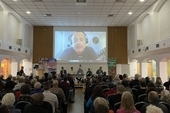
During her visit to the UK Aleida took part in the Cuba50 celebrations at the Barbican had interviews with the Guardian Newspaper and BBC TV’s Politics Show, spoke at the RMT Cuba Garden Party and at packed public meetings in Derby, Sheffield and London, and met with MPs at the House of Commons.

"Many people think that once Fidel and Raul (Castro) disappear, the Cuban revolution will also disappear with them. This is a very big mistake,” she told a packed audience at the House of Commons public meeting.

" The most beautiful part of the revolutionary process is that we are capable of recognising our own mistakes. And still more important is that we learn from them," she added.

"The power of the people. That is what we have in Cuba. That is why we have been able to survive these last 50 years,” she finished before answering questions and signing books.

Aleida ended many of her meetings by revealing her singing talent with powerful and beautiful renditions of Cuban songs including Silvio Rodriguez’s Fusil contra Fusil in the House of Commons, and a José Marti poem at the RMT Garden Party.


TOP
Bookmark and Share RSS